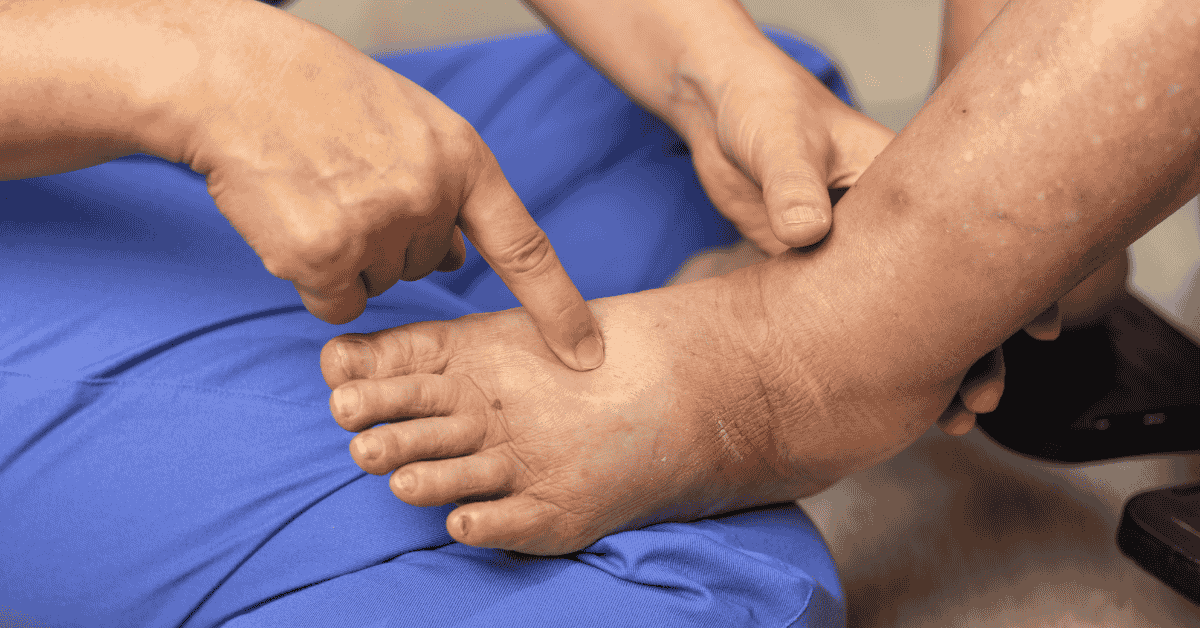
Leg swelling is easy to dismiss. Long day at work, too much standing, hot weather — many people assume swollen ankles or legs are temporary and harmless. While mild swelling can sometimes be related to lifestyle factors, persistent or recurring leg swelling is often a sign that your circulation isn’t working as well as it should.
Healthy veins and arteries move blood efficiently throughout the body. When that system struggles, fluid can build up in the legs, leading to swelling that may worsen as the day goes on. For some patients, swelling comes with heaviness, aching, tightness, skin discoloration, or visible veins. These symptoms shouldn’t be ignored.
One of the most common causes of leg swelling is chronic venous insufficiency, a condition where vein valves stop working properly and allow blood to pool in the legs. Over time, this pressure can stretch veins, damage surrounding tissue, and cause long-term discomfort. Swelling related to vein disease often improves when legs are elevated but returns once standing or walking resumes.
Another possible cause is peripheral artery disease (PAD), which affects blood flow through the arteries. Although PAD is more commonly associated with leg pain while walking, poor circulation can also contribute to swelling, delayed healing, and skin changes. In more advanced cases, swelling may signal a serious circulation problem requiring medical attention.
Leg swelling can also be linked to lymphatic system issues, blood clots, or underlying vascular conditions that only a proper evaluation can uncover. What matters most is recognizing patterns. Swelling that occurs frequently, affects one leg more than the other, feels painful, or is accompanied by skin changes should be evaluated by a vascular specialist.
At Laser Vascular Center, diagnosing the cause of leg swelling begins with a comprehensive vascular assessment. Non-invasive imaging, such as vascular ultrasound, allows specialists to see how blood is flowing and identify vein or artery issues beneath the surface. From there, personalized treatment plans can be created to address the root cause rather than just managing symptoms.
Modern vascular treatments are often minimally invasive and performed in an outpatient setting. Many patients experience improvement in swelling, comfort, and mobility once circulation is properly restored. Early evaluation not only helps relieve symptoms but also reduces the risk of long-term complications like skin breakdown or chronic wounds.
If leg swelling has become part of your daily life, it may be time to look beyond fatigue and listen to what your circulation is trying to tell you.
Our expert team is available Mon-Fri 8am-5pm MST
Call today: (480) 788-5621
FFREE VEIN SCREENING
Please fill out the form below and a member of our team will promptly contact you!
Follow us on social media!
Leg swelling is easy to dismiss. Long day at work, too much standing, hot weather — many people assume swollen ankles or legs are temporary and harmless. While mild swelling can sometimes be related to lifestyle factors, persistent or recurring leg swelling is often a sign that your circulation isn’t working as well as it should.
Healthy veins and arteries move blood efficiently throughout the body. When that system struggles, fluid can build up in the legs, leading to swelling that may worsen as the day goes on. For some patients, swelling comes with heaviness, aching, tightness, skin discoloration, or visible veins. These symptoms shouldn’t be ignored.
One of the most common causes of leg swelling is chronic venous insufficiency, a condition where vein valves stop working properly and allow blood to pool in the legs. Over time, this pressure can stretch veins, damage surrounding tissue, and cause long-term discomfort. Swelling related to vein disease often improves when legs are elevated but returns once standing or walking resumes.
Another possible cause is peripheral artery disease (PAD), which affects blood flow through the arteries. Although PAD is more commonly associated with leg pain while walking, poor circulation can also contribute to swelling, delayed healing, and skin changes. In more advanced cases, swelling may signal a serious circulation problem requiring medical attention.
Leg swelling can also be linked to lymphatic system issues, blood clots, or underlying vascular conditions that only a proper evaluation can uncover. What matters most is recognizing patterns. Swelling that occurs frequently, affects one leg more than the other, feels painful, or is accompanied by skin changes should be evaluated by a vascular specialist.
At Laser Vascular Center, diagnosing the cause of leg swelling begins with a comprehensive vascular assessment. Non-invasive imaging, such as vascular ultrasound, allows specialists to see how blood is flowing and identify vein or artery issues beneath the surface. From there, personalized treatment plans can be created to address the root cause rather than just managing symptoms.
Modern vascular treatments are often minimally invasive and performed in an outpatient setting. Many patients experience improvement in swelling, comfort, and mobility once circulation is properly restored. Early evaluation not only helps relieve symptoms but also reduces the risk of long-term complications like skin breakdown or chronic wounds.
If leg swelling has become part of your daily life, it may be time to look beyond fatigue and listen to what your circulation is trying to tell you.
Our expert team is available Mon-Fri 8am-5pm MST
Call today: (480) 788-5621
FREE VEIN SCREENING
Please fill out the form below and a member of our team will promptly contact you!