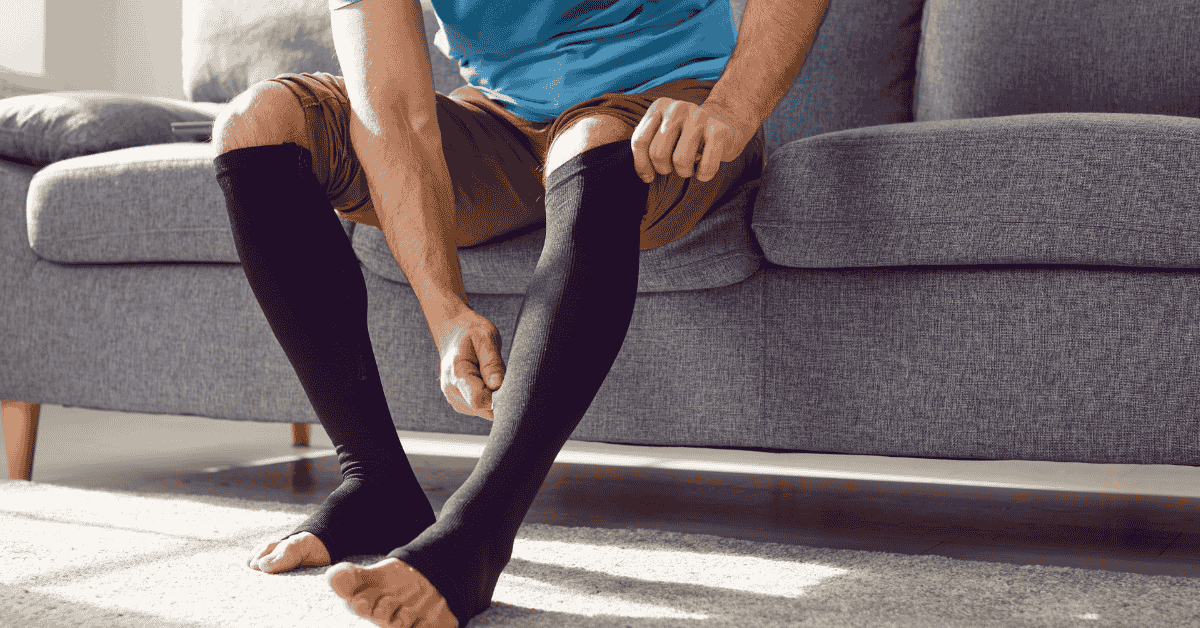
Compression socks are often the first recommendation people receive for leg swelling, varicose veins, or tired legs.
But do they actually treat vein disease — or just manage symptoms?
At Laser Vascular Center, patients frequently ask whether compression therapy is enough to solve their circulation problems. The answer depends on the severity of the underlying condition.
How Compression Socks Work
Compression stockings apply graduated pressure to the legs, meaning:
-
Tightest at the ankle
-
Gradually decreasing pressure up the leg
This external support helps push blood upward toward the heart, reducing pooling in the lower extremities.
They can:
-
Reduce swelling
-
Decrease leg fatigue
-
Improve comfort during long periods of standing or sitting
When Compression Socks Are Helpful
Compression therapy is often recommended for:
-
Mild venous insufficiency
-
Pregnancy-related swelling
-
Travel-related leg discomfort
-
Early-stage varicose veins
-
Post-procedure recovery
For some patients, especially those with minimal valve dysfunction, compression may significantly improve symptoms.
When Compression Is Not Enough
Compression socks do not repair faulty vein valves.
If ultrasound confirms significant venous reflux, compression may relieve discomfort — but the underlying condition remains.
Signs that compression alone may not be sufficient:
-
Persistent swelling despite daily use
-
Skin discoloration
-
Thickened or hardened skin near ankles
-
Non-healing wounds
-
Increasing varicose vein size
In these cases, minimally invasive procedures may provide long-term relief.
Are All Compression Socks the Same?
No. Medical-grade compression stockings are prescribed based on measured pressure levels (mmHg).
Improperly fitted or low-quality stockings may not provide therapeutic benefit.
A vascular evaluation ensures you’re using the correct compression level for your condition.
The Balanced Approach
At Laser Vascular Center, compression therapy is often part of a broader treatment plan.
For some patients, it’s a short-term strategy.
For others, it complements minimally invasive vein treatment.
The key is understanding the root cause of your symptoms — not just masking them.
If leg discomfort continues despite compression, it may be time for a vascular ultrasound evaluation.
Our expert team is available Mon-Fri 8am-5pm MST
Call today: (480) 788-5621
FFREE VEIN SCREENING
Please fill out the form below and a member of our team will promptly contact you!
Follow us on social media!
Compression socks are often the first recommendation people receive for leg swelling, varicose veins, or tired legs.
But do they actually treat vein disease — or just manage symptoms?
At Laser Vascular Center, patients frequently ask whether compression therapy is enough to solve their circulation problems. The answer depends on the severity of the underlying condition.
How Compression Socks Work
Compression stockings apply graduated pressure to the legs, meaning:
-
Tightest at the ankle
-
Gradually decreasing pressure up the leg
This external support helps push blood upward toward the heart, reducing pooling in the lower extremities.
They can:
-
Reduce swelling
-
Decrease leg fatigue
-
Improve comfort during long periods of standing or sitting
When Compression Socks Are Helpful
Compression therapy is often recommended for:
-
Mild venous insufficiency
-
Pregnancy-related swelling
-
Travel-related leg discomfort
-
Early-stage varicose veins
-
Post-procedure recovery
For some patients, especially those with minimal valve dysfunction, compression may significantly improve symptoms.
When Compression Is Not Enough
Compression socks do not repair faulty vein valves.
If ultrasound confirms significant venous reflux, compression may relieve discomfort — but the underlying condition remains.
Signs that compression alone may not be sufficient:
-
Persistent swelling despite daily use
-
Skin discoloration
-
Thickened or hardened skin near ankles
-
Non-healing wounds
-
Increasing varicose vein size
In these cases, minimally invasive procedures may provide long-term relief.
Are All Compression Socks the Same?
No. Medical-grade compression stockings are prescribed based on measured pressure levels (mmHg).
Improperly fitted or low-quality stockings may not provide therapeutic benefit.
A vascular evaluation ensures you’re using the correct compression level for your condition.
The Balanced Approach
At Laser Vascular Center, compression therapy is often part of a broader treatment plan.
For some patients, it’s a short-term strategy.
For others, it complements minimally invasive vein treatment.
The key is understanding the root cause of your symptoms — not just masking them.
If leg discomfort continues despite compression, it may be time for a vascular ultrasound evaluation.
Our expert team is available Mon-Fri 8am-5pm MST
Call today: (480) 788-5621
FREE VEIN SCREENING
Please fill out the form below and a member of our team will promptly contact you!