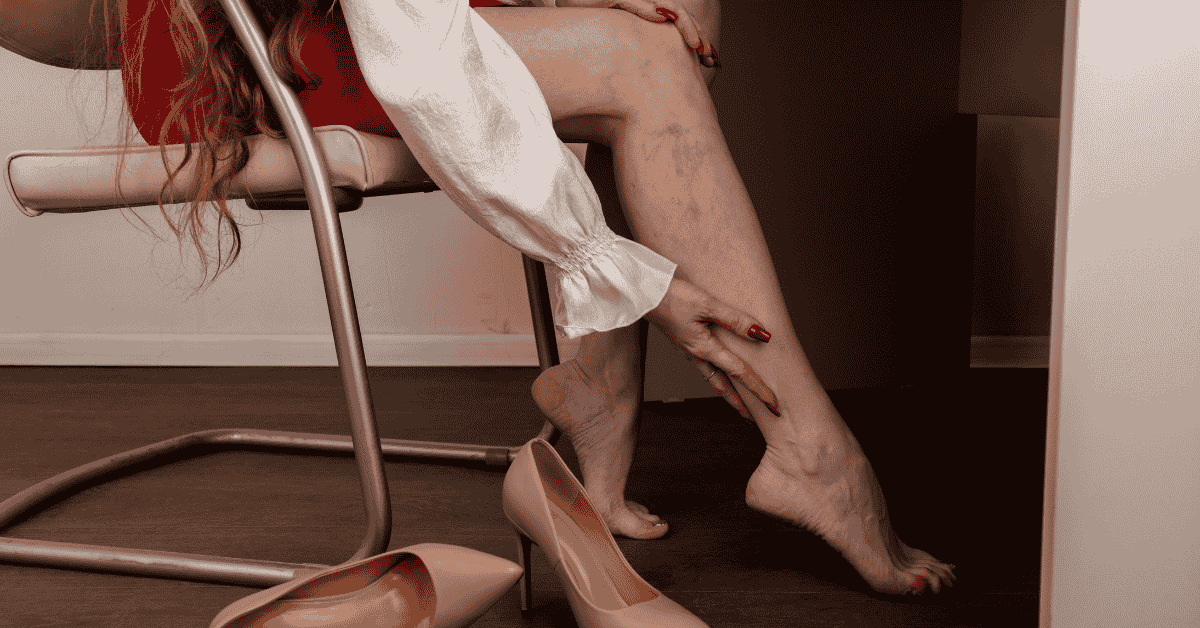
At the end of a long day, it’s common to feel heaviness in your legs. Maybe you’ve been standing at work, sitting too long, or simply busy with daily life. But what if those “tired legs” aren’t just fatigue?
For many people across Arizona, persistent leg discomfort is actually an early sign of venous disease — a medical condition that affects circulation and worsens over time if left untreated.
At Laser Vascular Center, we regularly meet patients who assumed their symptoms were normal — only to discover an underlying vein issue that was treatable with minimally invasive care.
So how do you know the difference?
Here are 7 warning signs your tired legs may actually be a vein problem.
1. Leg Heaviness That Gets Worse Throughout the Day
Do your legs feel heavy, tight, or weighed down by evening?
This classic symptom of chronic venous insufficiency (CVI) occurs when vein valves in your legs don’t properly push blood back toward the heart. Instead, blood pools in the lower extremities, creating pressure and fatigue.
Unlike normal tiredness, venous heaviness:
-
Improves when you elevate your legs
-
Worsens after prolonged standing or sitting
-
Returns consistently day after day
If this sounds familiar, a vascular ultrasound can determine whether circulation issues are the cause.
2. Swelling in the Ankles or Lower Legs
Occasional swelling after travel or long workdays can be normal. But persistent or daily swelling is often a circulation red flag.
Venous insufficiency causes fluid buildup in surrounding tissues. Over time, untreated swelling can lead to:
-
Skin discoloration
-
Hardening of tissue
-
Venous ulcers
If your socks leave deep marks or your ankles appear puffy by evening, it’s time to consider a vein evaluation.
3. Visible Varicose Veins or Spider Veins
Twisted, bulging varicose veins are more than cosmetic concerns. They often indicate underlying valve dysfunction.
Spider veins — thin red or purple veins near the skin’s surface — can also be associated with deeper venous issues.
Many patients are surprised to learn that treating the underlying circulation problem often improves both medical symptoms and cosmetic appearance.
4. Nighttime Leg Cramping or Restlessness
Do you experience:
-
Leg cramps at night?
-
Burning sensations?
-
Restless legs that disrupt sleep?
Poor circulation can reduce oxygen delivery to muscles, triggering cramping and discomfort. If stretching and hydration don’t resolve the issue, vascular testing may be appropriate.
5. Itchy, Discolored, or Thickened Skin Near the Ankles
Skin changes around the lower legs are a late-stage sign of chronic venous disease.
You may notice:
-
Brown or reddish discoloration
-
Dry, itchy patches
-
Thickened or leathery skin
These changes occur because prolonged pressure damages small blood vessels and surrounding tissue.
Early treatment can prevent progression to open sores or ulcers.
6. Non-Healing Wounds on the Lower Legs
Slow-healing wounds near the ankles or shins are often linked to poor venous circulation.
Venous ulcers develop when blood pooling prevents proper oxygen and nutrient delivery to tissues. Without vascular intervention, these wounds can persist for months.
Laser Vascular Center provides comprehensive vascular evaluation to identify and address the root cause of chronic wounds.
7. Symptoms That Improve When You Elevate Your Legs
One of the clearest indicators of venous disease is symptom relief when legs are elevated.
If your discomfort:
-
Improves when lying down
-
Returns quickly when standing
-
Is worse after long workdays
That pattern strongly suggests a vein circulation issue rather than general fatigue.
Why Early Diagnosis Matters
Vein disease is progressive.
What begins as mild heaviness can develop into:
-
Chronic swelling
-
Skin damage
-
Blood clots
-
Ulcers
-
Increased risk of complications
The good news? Modern treatments are minimally invasive, in-office, and require little downtime.
At Laser Vascular Center, we use advanced vascular ultrasound imaging to evaluate circulation and create personalized treatment plans. Many procedures — such as endovenous laser therapy and radiofrequency ablation — are performed comfortably without hospital stays.
Who Is Most at Risk?
You may have higher risk if you:
-
Have a family history of vein disease
-
Stand or sit for long periods
-
Are pregnant or have had multiple pregnancies
-
Are over age 40
-
Are overweight
-
Have a history of blood clots
Arizona’s warm climate can also worsen swelling by dilating blood vessels.
When Should You Schedule a Vein Evaluation?
You should consider an appointment if:
-
Symptoms occur most days
-
Swelling does not resolve overnight
-
Veins are visibly enlarged or painful
-
Skin changes are developing
-
Discomfort limits daily activities
Early evaluation allows for simpler, more effective treatment options.
Take the First Step Toward Healthier Circulation
If your legs constantly feel tired, heavy, or swollen, don’t dismiss it as normal aging.
The specialists at Laser Vascular Center are dedicated to diagnosing and treating the underlying causes of vein disease using advanced, minimally invasive techniques across Arizona.
Relief may be simpler than you think — and it starts with understanding what your body is telling you.
Schedule a comprehensive vein evaluation today and take control of your vascular health.
Our expert team is available Mon-Fri 8am-5pm MST
Call today: (480) 788-5621
FFREE VEIN SCREENING
Please fill out the form below and a member of our team will promptly contact you!
Follow us on social media!
At the end of a long day, it’s common to feel heaviness in your legs. Maybe you’ve been standing at work, sitting too long, or simply busy with daily life. But what if those “tired legs” aren’t just fatigue?
For many people across Arizona, persistent leg discomfort is actually an early sign of venous disease — a medical condition that affects circulation and worsens over time if left untreated.
At Laser Vascular Center, we regularly meet patients who assumed their symptoms were normal — only to discover an underlying vein issue that was treatable with minimally invasive care.
So how do you know the difference?
Here are 7 warning signs your tired legs may actually be a vein problem.
1. Leg Heaviness That Gets Worse Throughout the Day
Do your legs feel heavy, tight, or weighed down by evening?
This classic symptom of chronic venous insufficiency (CVI) occurs when vein valves in your legs don’t properly push blood back toward the heart. Instead, blood pools in the lower extremities, creating pressure and fatigue.
Unlike normal tiredness, venous heaviness:
-
Improves when you elevate your legs
-
Worsens after prolonged standing or sitting
-
Returns consistently day after day
If this sounds familiar, a vascular ultrasound can determine whether circulation issues are the cause.
2. Swelling in the Ankles or Lower Legs
Occasional swelling after travel or long workdays can be normal. But persistent or daily swelling is often a circulation red flag.
Venous insufficiency causes fluid buildup in surrounding tissues. Over time, untreated swelling can lead to:
-
Skin discoloration
-
Hardening of tissue
-
Venous ulcers
If your socks leave deep marks or your ankles appear puffy by evening, it’s time to consider a vein evaluation.
3. Visible Varicose Veins or Spider Veins
Twisted, bulging varicose veins are more than cosmetic concerns. They often indicate underlying valve dysfunction.
Spider veins — thin red or purple veins near the skin’s surface — can also be associated with deeper venous issues.
Many patients are surprised to learn that treating the underlying circulation problem often improves both medical symptoms and cosmetic appearance.
4. Nighttime Leg Cramping or Restlessness
Do you experience:
-
Leg cramps at night?
-
Burning sensations?
-
Restless legs that disrupt sleep?
Poor circulation can reduce oxygen delivery to muscles, triggering cramping and discomfort. If stretching and hydration don’t resolve the issue, vascular testing may be appropriate.
5. Itchy, Discolored, or Thickened Skin Near the Ankles
Skin changes around the lower legs are a late-stage sign of chronic venous disease.
You may notice:
-
Brown or reddish discoloration
-
Dry, itchy patches
-
Thickened or leathery skin
These changes occur because prolonged pressure damages small blood vessels and surrounding tissue.
Early treatment can prevent progression to open sores or ulcers.
6. Non-Healing Wounds on the Lower Legs
Slow-healing wounds near the ankles or shins are often linked to poor venous circulation.
Venous ulcers develop when blood pooling prevents proper oxygen and nutrient delivery to tissues. Without vascular intervention, these wounds can persist for months.
Laser Vascular Center provides comprehensive vascular evaluation to identify and address the root cause of chronic wounds.
7. Symptoms That Improve When You Elevate Your Legs
One of the clearest indicators of venous disease is symptom relief when legs are elevated.
If your discomfort:
-
Improves when lying down
-
Returns quickly when standing
-
Is worse after long workdays
That pattern strongly suggests a vein circulation issue rather than general fatigue.
Why Early Diagnosis Matters
Vein disease is progressive.
What begins as mild heaviness can develop into:
-
Chronic swelling
-
Skin damage
-
Blood clots
-
Ulcers
-
Increased risk of complications
The good news? Modern treatments are minimally invasive, in-office, and require little downtime.
At Laser Vascular Center, we use advanced vascular ultrasound imaging to evaluate circulation and create personalized treatment plans. Many procedures — such as endovenous laser therapy and radiofrequency ablation — are performed comfortably without hospital stays.
Who Is Most at Risk?
You may have higher risk if you:
-
Have a family history of vein disease
-
Stand or sit for long periods
-
Are pregnant or have had multiple pregnancies
-
Are over age 40
-
Are overweight
-
Have a history of blood clots
Arizona’s warm climate can also worsen swelling by dilating blood vessels.
When Should You Schedule a Vein Evaluation?
You should consider an appointment if:
-
Symptoms occur most days
-
Swelling does not resolve overnight
-
Veins are visibly enlarged or painful
-
Skin changes are developing
-
Discomfort limits daily activities
Early evaluation allows for simpler, more effective treatment options.
Take the First Step Toward Healthier Circulation
If your legs constantly feel tired, heavy, or swollen, don’t dismiss it as normal aging.
The specialists at Laser Vascular Center are dedicated to diagnosing and treating the underlying causes of vein disease using advanced, minimally invasive techniques across Arizona.
Relief may be simpler than you think — and it starts with understanding what your body is telling you.
Schedule a comprehensive vein evaluation today and take control of your vascular health.
Our expert team is available Mon-Fri 8am-5pm MST
Call today: (480) 788-5621
FREE VEIN SCREENING
Please fill out the form below and a member of our team will promptly contact you!