Although venous insufficiency is a serious condition, it is treatable. EVLT procedures will also help by ablating superficial veins in the lower extremity, and allowing the blood to improve circulation. We have medical compression stockings that are made to treat and help these symptoms and pains. There are a few treatment options with venous ulcers. We offer an Unna Boot treatment which is a medicated wrap containing zinc oxide to promote healing. If you are worried about your current venous condition or even have more questions about venous insufficiency, just give us a call and schedule an appointment.
Categories
- Cardiology 01
- COVID-19 68
- COVID-19 Treatment 68
- Gastroenterology 02
- Health Care 02
- Hospital 01
- lymphedema 72
- Neurology 01
- Orthopedics 01
- Peripheral Arterial Disease 02
- Prescott vein clinic 108
- Pulmonology 03
- Radiology 03
- sclerotherapy 91
- skin ulcers 90
- Uncategorized 51
- Varicose Veins 107
- vascular surgeon 149
- vascular surgeon in Phoenix, AZ 147
- Vein Clinic 146
- vein clinic in arizona 148
- vein disease 146
- Venous Insufficiency 96
- Venous Ulcers 93
Recent Posts
Deep Vein Thrombosis (DVT): Symptoms, Causes, and Prevention
August 17, 2026
When Should You See a Vein Specialist? Key Symptoms to Watch For
August 10, 2026
Venous Insufficiency
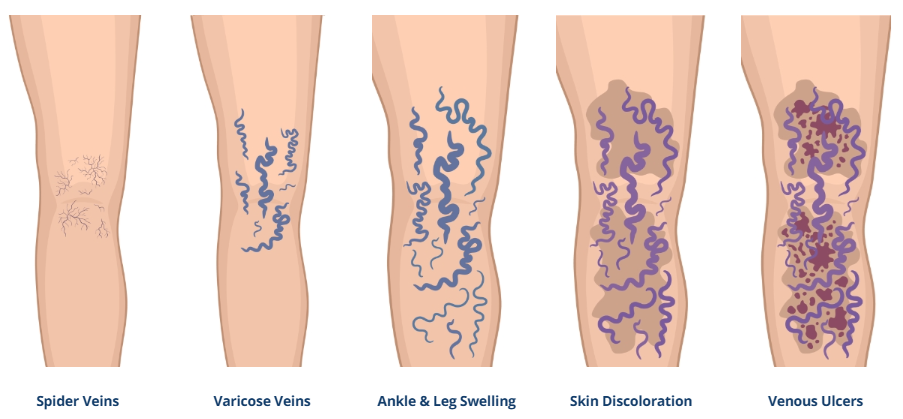
A growing problem that we are seeing more and more is venous insufficiency. Many people are letting their symptoms go untreated and un-diagnosed. As a result, many patients experience their condition worsening and leg swelling, skin discoloration and venous ulcers can occur. This happens when the leg veins do not return the blood to the heart the way they should be. This means the valves that are inside the veins are damaged. This creates a build up of blood in the lower leg which can leak out and breakdown tissue. This is most commonly seen around the ankle area with darkening of the skin. This dark skin is due to the tissue breakdown and can feel very rough and hard like a callus.
Stages of Vein Disease
General Ask
What is venous insufficiency?
Venous insufficiency is a condition where the veins in the legs have difficulty returning blood back to the heart. It often occurs when the valves inside the veins do not work properly, allowing blood to pool in the legs.
What are the common symptoms of venous insufficiency?
Common symptoms include leg swelling, aching or heaviness, tired legs, varicose veins, skin discoloration, and discomfort that may worsen after prolonged standing or sitting.
What causes venous insufficiency?
Venous insufficiency can be associated with damaged vein valves, aging, family history, prolonged standing or sitting, obesity, pregnancy, and a history of blood clots.
Is venous insufficiency serious?
It can become more problematic when left untreated. In advanced cases, chronic swelling, skin changes, or leg ulcers may develop. Early evaluation can help identify appropriate treatment options.
How is venous insufficiency diagnosed?
A healthcare provider may review your symptoms and medical history and perform a physical examination. A duplex ultrasound is commonly used to evaluate blood flow and check how well the veins and their valves are functioning.
Can venous insufficiency be treated?
Yes. Treatment depends on the severity and may include lifestyle changes, compression therapy, medications when appropriate, or minimally invasive vein procedures.
Can exercise help with venous insufficiency?
Regular, appropriate physical activity can help improve circulation. Walking and exercises that activate the calf muscles may support the return of blood from the legs.
Can venous insufficiency cause varicose veins?
Yes. When blood pools in the leg veins because the valves are not working properly, the veins can become enlarged and twisted, resulting in varicose veins.
Can venous insufficiency cause leg swelling?
Yes. Blood pooling in the legs can increase pressure within the veins and contribute to swelling, particularly around the ankles and lower legs.
When should I see a doctor about venous insufficiency?
Consider an evaluation if you have persistent leg swelling, aching, heaviness, visible varicose veins, skin changes, or wounds that are slow to heal. A vein specialist can assess your circulation and discuss appropriate treatment options.