Categories
- Cardiology 01
- COVID-19 68
- COVID-19 Treatment 68
- Gastroenterology 02
- Health Care 02
- Hospital 01
- lymphedema 72
- Neurology 01
- Orthopedics 01
- Peripheral Arterial Disease 02
- Prescott vein clinic 108
- Pulmonology 03
- Radiology 03
- sclerotherapy 91
- skin ulcers 90
- Uncategorized 51
- Varicose Veins 107
- vascular surgeon 149
- vascular surgeon in Phoenix, AZ 147
- Vein Clinic 146
- vein clinic in arizona 148
- vein disease 146
- Venous Insufficiency 96
- Venous Ulcers 93
Recent Posts
Deep Vein Thrombosis (DVT): Symptoms, Causes, and Prevention
When Should You See a Vein Specialist? Key Symptoms to Watch For
Minimally Invasive Treatment of Varicose Veins Using EVLT
Introduction
Varicose veins are enlarged, twisted superficial veins that commonly occur in the lower limbs. They may cause symptoms such as aching, heaviness, swelling, itching, and discomfort, and in some patients may be associated with skin changes or other complications.
Endovenous Laser Treatment (EVLT), also called endovenous laser ablation (EVLA), is a minimally invasive endothermal technique used to close an incompetent superficial vein. Laser energy heats the inside of the vein, causing the treated vein to close. NICE recommends endothermal ablation as an interventional treatment option for patients with confirmed varicose veins and truncal venous reflux when the procedure is suitable.
Patient Profile
Patient: Adult patient
Presenting condition: Symptomatic lower-limb varicose veins
Primary complaints: Leg heaviness, aching/discomfort and prominent varicose veins
Assessment: Clinical examination followed by venous duplex ultrasound
Treatment: Ultrasound-guided Endovenous Laser Treatment
Anaesthesia: Local/tumescent anaesthesia, according to the treatment plan
Setting: Outpatient/day-care vascular procedure
Note: The patient details above are an illustrative case-study framework. The uploaded photograph is used to illustrate an EVLT procedure; specific patient age, vein involved, ultrasound findings, laser wavelength, energy and outcome should be replaced with the actual clinical records.
Clinical Assessment
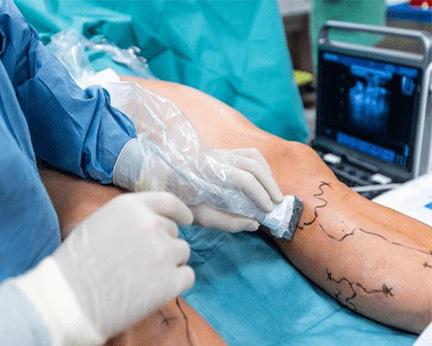
The patient presented with symptomatic varicose veins of the lower limb. A duplex ultrasound examination was performed to assess the superficial and deep venous systems, identify venous reflux and determine the anatomy of the incompetent truncal vein.
Duplex ultrasound is recommended to confirm varicose veins, determine the extent of truncal reflux and assist with treatment planning.
The assessment identified a pattern of superficial venous incompetence suitable for endovenous treatment.
Treatment Decision
After discussing the available treatment options, including their potential benefits, limitations and risks, EVLT was selected as an appropriate minimally invasive treatment.
Endothermal ablation is generally considered before ultrasound-guided foam sclerotherapy or surgery when it is suitable for the individual patient.
EVLT Procedure
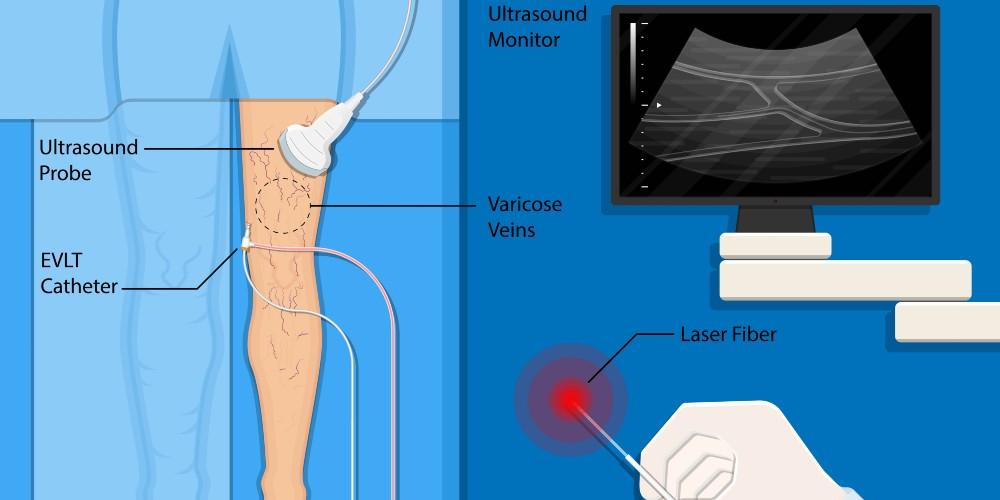
The patient was positioned appropriately and the target vein was identified using real-time ultrasound guidance.
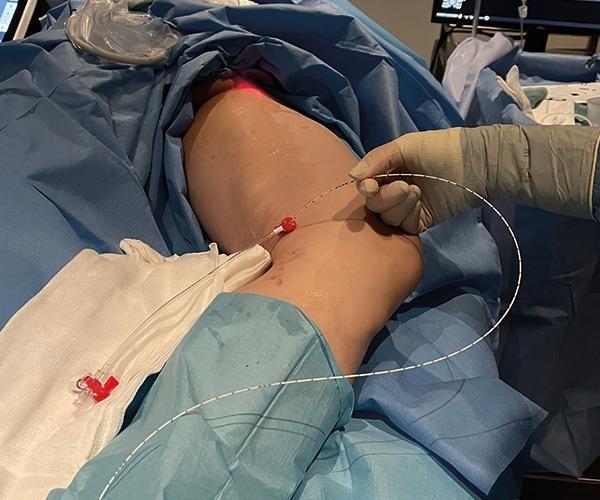
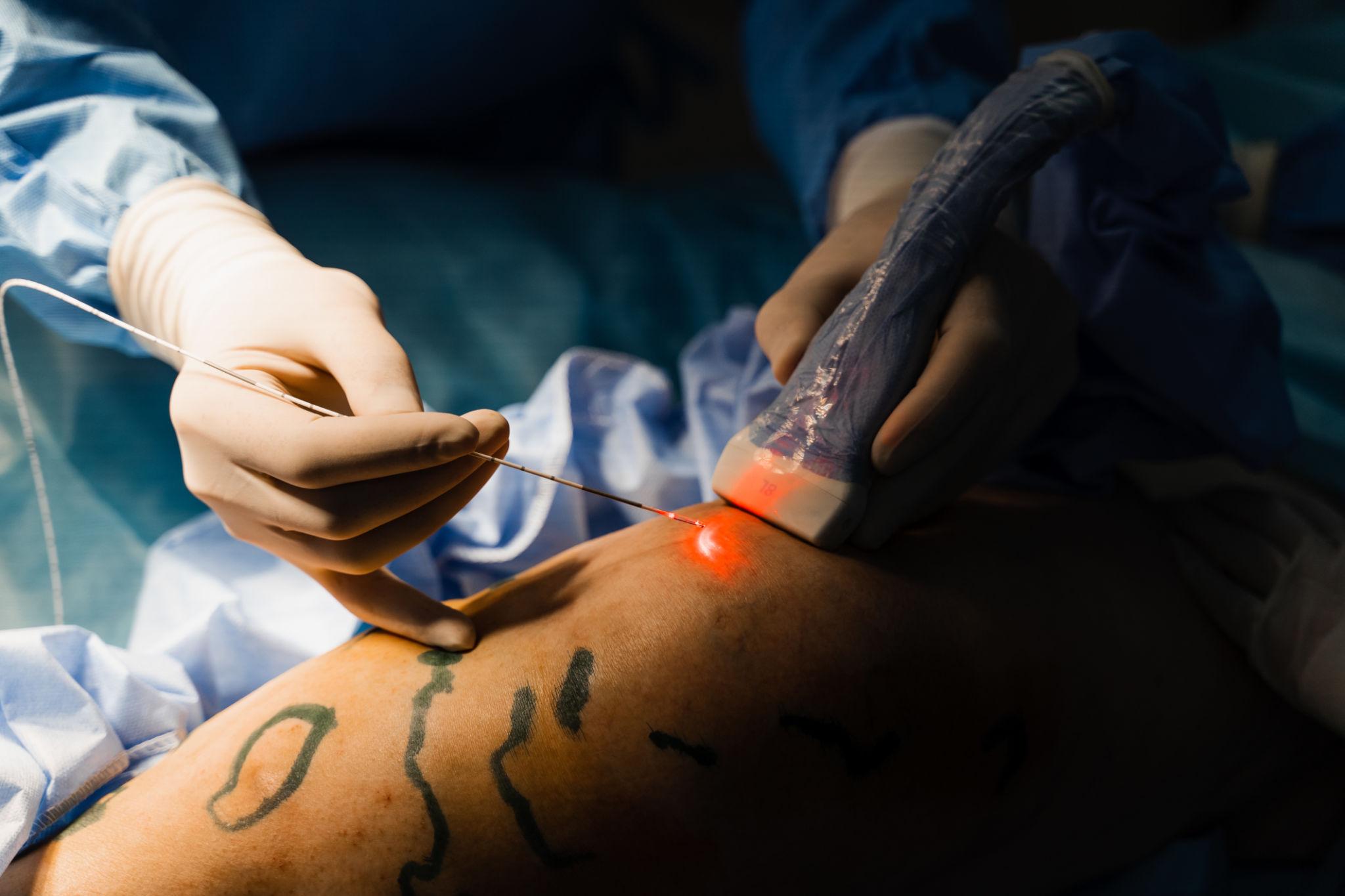
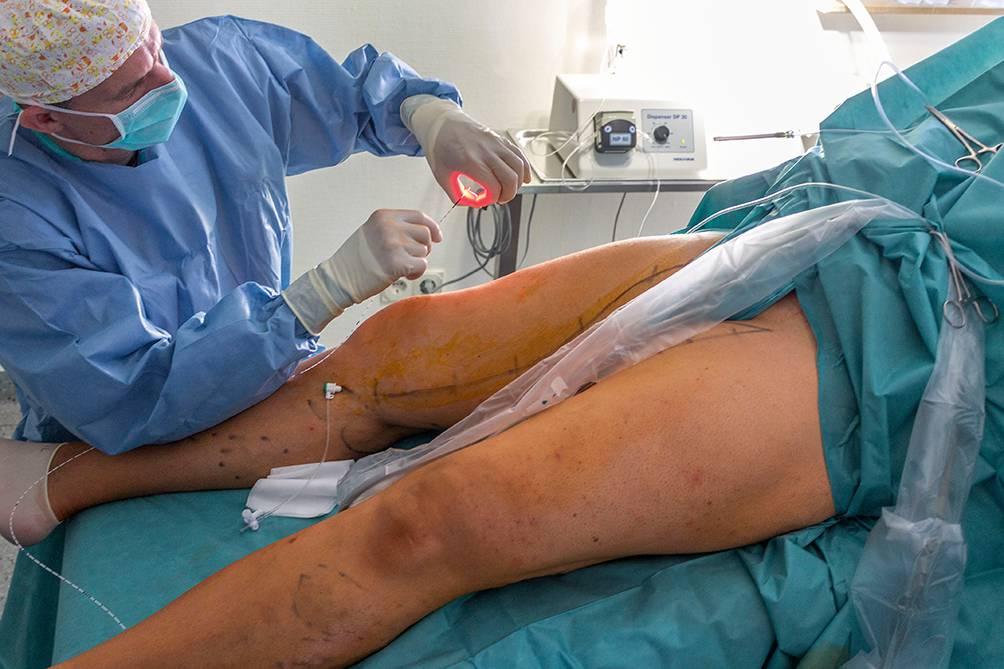
After skin preparation and local anaesthesia, the target vein was accessed percutaneously. A laser fibre was positioned within the incompetent vein under ultrasound guidance.
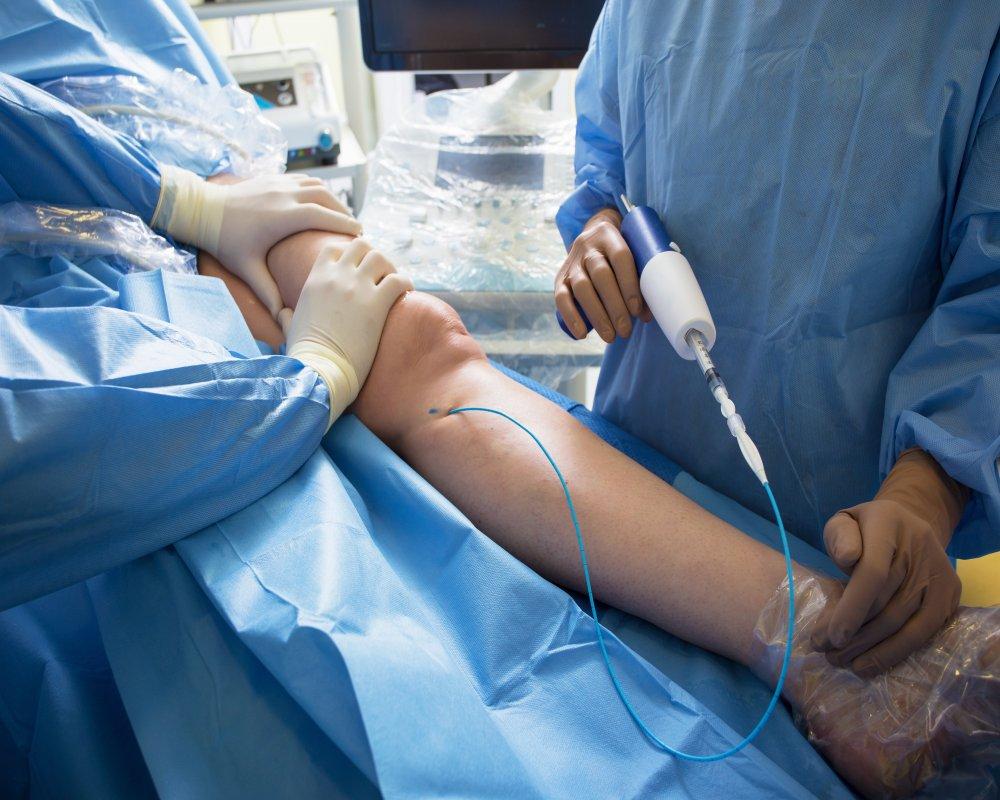
Tumescent anaesthesia was administered around the treated vein to provide local anaesthesia and create a protective fluid layer around the vein during thermal treatment. Endovenous thermal ablation is performed with a perivenous fluid heat sink/tumescent solution in contemporary procedural practice.
The laser fibre was then activated while being withdrawn according to the selected treatment protocol. The generated thermal energy produced controlled injury to the venous wall, resulting in contraction and eventual occlusion of the treated vein.
The procedure was performed under ultrasound visualization to monitor the position of the fibre and treatment area.
Key procedural steps
Outcome
The patient tolerated the procedure without an immediate major complication and was monitored following treatment.
The treated vein is expected to remain closed as the body gradually remodels the treated segment. Improvement in symptoms and reduction in the appearance of varicose veins may occur progressively following treatment.
Follow-up should include clinical assessment and, where indicated by the treating clinician or local protocol, duplex ultrasound to assess treatment success and exclude complications.
Patients should also be informed that new varicose veins can develop after treatment and some patients may require more than one treatment session.
Clinical Discussion
EVLT provides a minimally invasive alternative to conventional surgical vein stripping for appropriately selected patients with superficial venous reflux.
Unlike traditional stripping, which physically removes the vein, EVLT uses thermal energy to close the incompetent vein. NICE describes laser ablation as an endothermal technique that closes the vein by raising the temperature within the venous lumen.
The success of treatment depends on appropriate patient selection, accurate duplex ultrasound assessment, correct identification of the target vein and careful ultrasound-guided technique.
Advantages of EVLT
- Minimally invasive approach
- Usually performed without conventional surgical vein stripping
- Ultrasound-guided treatment
- Small percutaneous access site
- Can be performed as an outpatient/day-care procedure
- Generally allows a relatively rapid return to normal activities
- Addresses the underlying incompetent truncal vein rather than simply treating visible surface veins
Important considerations
EVLT is not appropriate for every patient. Treatment selection should take into account venous anatomy, reflux pattern, previous procedures, comorbidities, patient preferences and the clinician’s assessment.
Potential complications can include pain or bruising, superficial thrombophlebitis, skin or nerve-related symptoms, bleeding, infection and thromboembolic complications. Patients should receive individualized counselling about risks and expected recovery.
General Ask
What is EVLT?
Why is EVLT performed?
Is EVLT a surgical procedure?
Is EVLT performed under general anaesthesia?
Is EVLT painful?
How is the vein located?
What happens to the treated vein?
Can varicose veins come back after EVLT?
How quickly can I return to normal activities?
Are compression stockings required after EVLT?
Is EVLT better than surgery?
Who is a candidate for EVLT?
Conclusion
Endovenous Laser Treatment (EVLT) is an established minimally invasive approach for appropriately selected patients with symptomatic varicose veins and superficial venous reflux. Careful duplex ultrasound assessment, ultrasound-guided treatment and appropriate patient selection are essential components of successful management.
In this illustrative case, EVLT provided a minimally invasive method of treating the underlying incompetent vein while avoiding conventional surgical vein stripping. Current NICE guidance places endothermal ablation among the preferred interventional treatments for suitable patients with confirmed truncal reflux.
Clinical disclaimer: This case study is intended for educational/healthcare communication purposes and is not a substitute for individualized medical assessment. Actual patient information, procedural parameters and outcomes should be documented from the clinical record rather than inferred from the photograph.